Colours and coat types of the Syrian hamster
The Syrian hamster is also most commonly know as the golden hamster as this is the original 'wild' colour. However, over the years many different colours, coat lengths, patterns and coat types have now developed due to mutations. Here I have listed a wide variety of the colours/coats that are around today although it is not possible to list them all!
Agouti
The Syrian hamster is also most commonly know as the golden hamster as this is the original 'wild' colour. However, over the years many different colours, coat lengths, patterns and coat types have now developed due to mutations. Here I have listed a wide variety of the colours/coats that are around today although it is not possible to list them all!
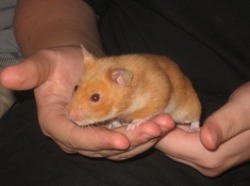 Cinnamon - Pic courtesy of Penny Hams Genetic Code: pp
| 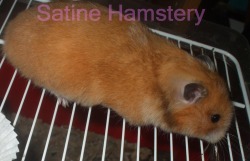 Yellow Genetic Code: male: To; Female: ToTo
|
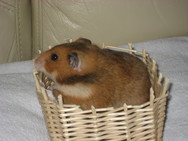 Dark Golden - Pic courtesy of Penny Hams Genetic Code: ++
| 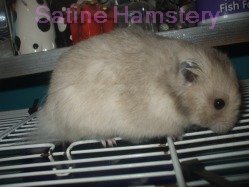 Smoke Pearl Genetic Code: Male: dgdgTo; Female: dgdgToTo
|
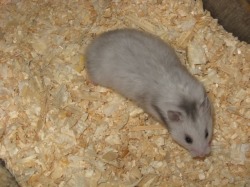 Silver Grey - Pic courtesy of Autumn Breeze Hamstery Genetic Code: SgSg
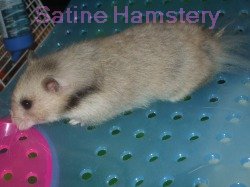 Dark Grey Genetic Code: dgdg
| 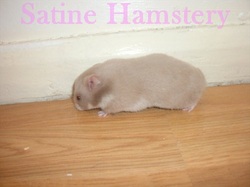 Lilac Genetic Code: dgdgpp
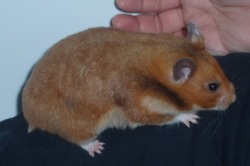 Rust - Pic courtesy of Rachel Brown Genetic Code: bb
|
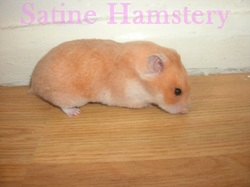 Honey
Genetic Code: Male - pp To_, Female - pp ToTo |
Self Colours
Self coloured hamsters are the same colour all over their body and there are many different colours.
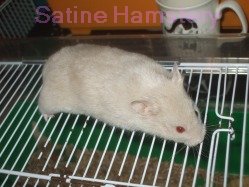 Dove Genetic Code: aapp
| 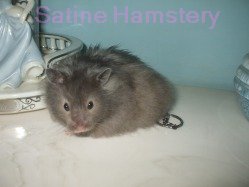 Sable Genetic Code: UUee
|
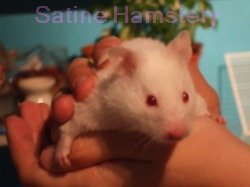 Flesh Eared White Genetic Code: cdcdpp
| 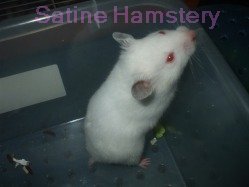 Dark Eared White Genetic Code: cdcd
|
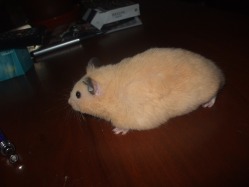 Black Eyed Cream Genetic Code: ee
| 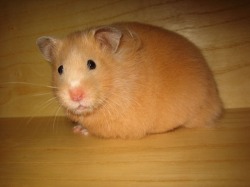 Red Eyed Cream - Pic couresty of Custard Hamstery Genetic Code: eepp
|
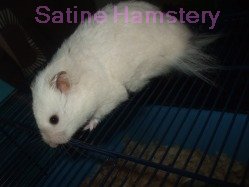 Black Eyed Ivory Genetic Code: eeLglg or eedgdg
| 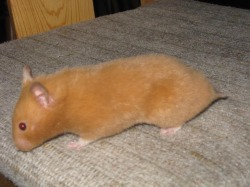 Mink - Pic courtesy of Autumn Breeze Hamstery Genetic Code: UUeepp
|
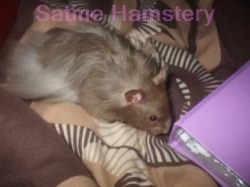 Chocolate (black) Genetic Code: aabb
| 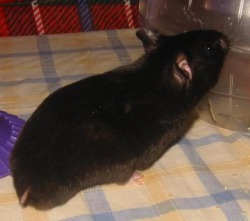 Black - Pic courtesy of Mythic Hams Genetic Code: bb
|
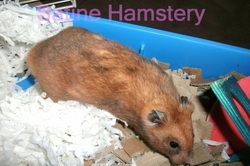 Yellow Black (melanistic yellow) Genetic Code: Male: aaTo; Female: aaToTo
|
Coat Lengths
Syrian hamsters can be either shorthaired or longhaired. Longhaired males tend to be easy to notice because of their ability to grow long 'skirts' this can reach a length of up to 4 inches around the edge of the body. The longhaired female does not grow an impressive skirt like the males but instead she gains a fluffy coat which is a lot easier to manage.
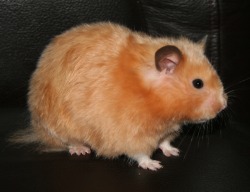 Longhaired satin BEC female - Pic courtesy of Miltonhams | 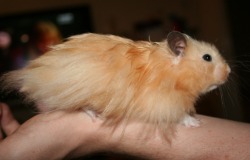 Longhaired satin BEC male - Pic courtesy of Miltonhams |
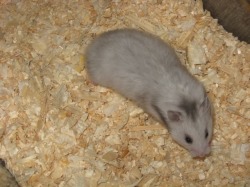 Longhaired silver grey female - Pic courtesy of Autumn Breeze Hamstery | 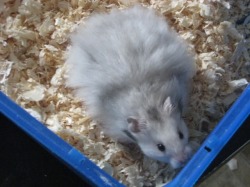 Longhaired silver grey male - Pic courtesy of Autumn Breeze Hamstery |
Coat Types
Satin
Satin coated hamsters have a glossy shine to their coats and each hair is hollow and acts as a prism relecting the light and giving the coat its shine.
Satin can be combined with longhaired and rex.
Satin can be combined with longhaired and rex.
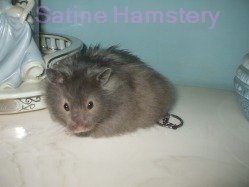 Longhaired sable | 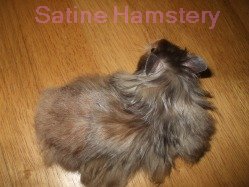 Longhaired satin sable |
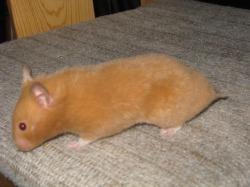 Shorthaired mink | 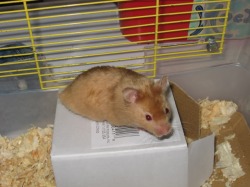 Shorthaired satin mink |
Rex
The rex gene gives the hamster a wave in its fur and is easily seen by the hamster's curly whiskers!
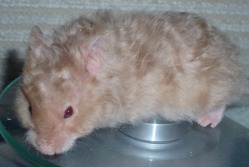 Pic courtesy of Rachel Brown | 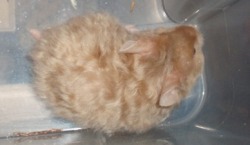 Pic courtesy of Rachel Brown |
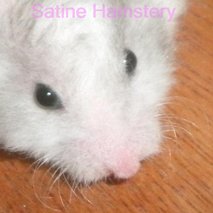 Close up of the curly whiskers on a rex |
Patterns
Banded
Banded hamsters have a white band circling their middle. The width of the white band can vary but ideally for showing purposes should be one third of the hamsters body and have no breaks or spots of colour in it.
The banded gene is random and so a hamster with a good band may not produce well marked young and vice versa.
The banded gene is random and so a hamster with a good band may not produce well marked young and vice versa.
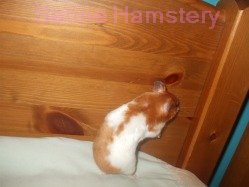 Cinnamon Banded 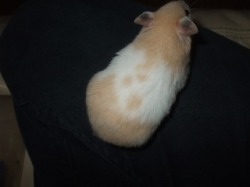 Cream Banded | 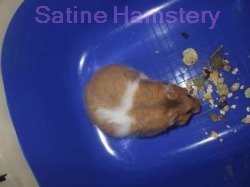 Rust Banded |
Dominant Spot
A dominant spotted hamster is one with spots/patches of colour. The patterning of this gene is totally random and can range from looking like a white animal with many coloured spots to one with hardly and from a coloured animal with white spots/patches.
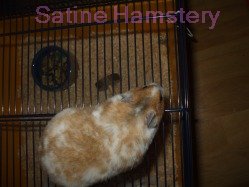 Golden Dominant Spot | 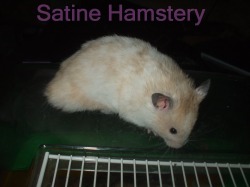 Yellow Dominant spot |
Dominant Spot Banded
This is the dominant spotted gene combined with the banded gene. It should have the appearance of a spotted hamster with a white band circling its middle. The band should have not spots of colour in it.
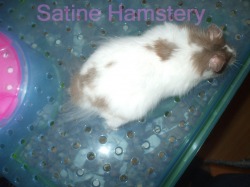 Dove Banded Dominant Spot | 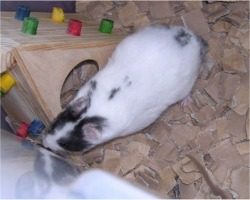 Black Dominant Spot Banded - Pic Courtesy of Jelly Hams |
Roan
Roan was created by result as what is known as the white bellied gene. In self coloured animals such as the sable, cream and mink it creates a marble effect of their colouring and can range from lighter ticking to quite heavy ticking. The 'ticking' is usually darkest on the head and can vary how heavy from hamster to hamster.
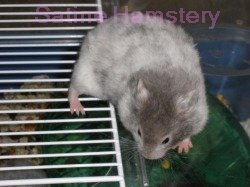 Sable Roan | 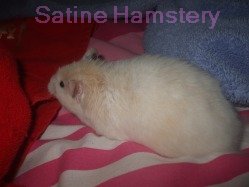 Cream Roan |
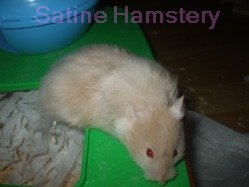 Mink Roan |
Tortoiseshell
Tortoiseshell is made by combining the yellow gene with other colours and the same as cats, all tortoiseshell hamsters are females. The yellow gene can be added to other colours to change the appearance; for example yellow combines with dark grey to make smoke pearl so the tort patches on a dark grey will be smoke pearl, on a cinnamon will be honey but on colours such as the golden, black and chocolate the patches will remain yellow.
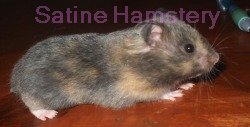 Black Tortoiseshell | 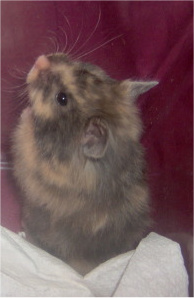 Chocolate Tortoiseshell - Pic courtesy of Emma's Hamsters |
Tortoiseshell and White
Tortoiseshell can also be combined with banded and dominant spot to make banded torts, dominant spot torts and even banded dominant spot torts!
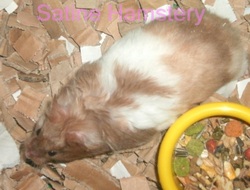 Chocolate Tortoiseshell and hite banded | 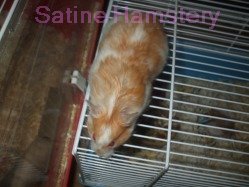 Cinnamon Tortoiseshell and White dominant spot |
